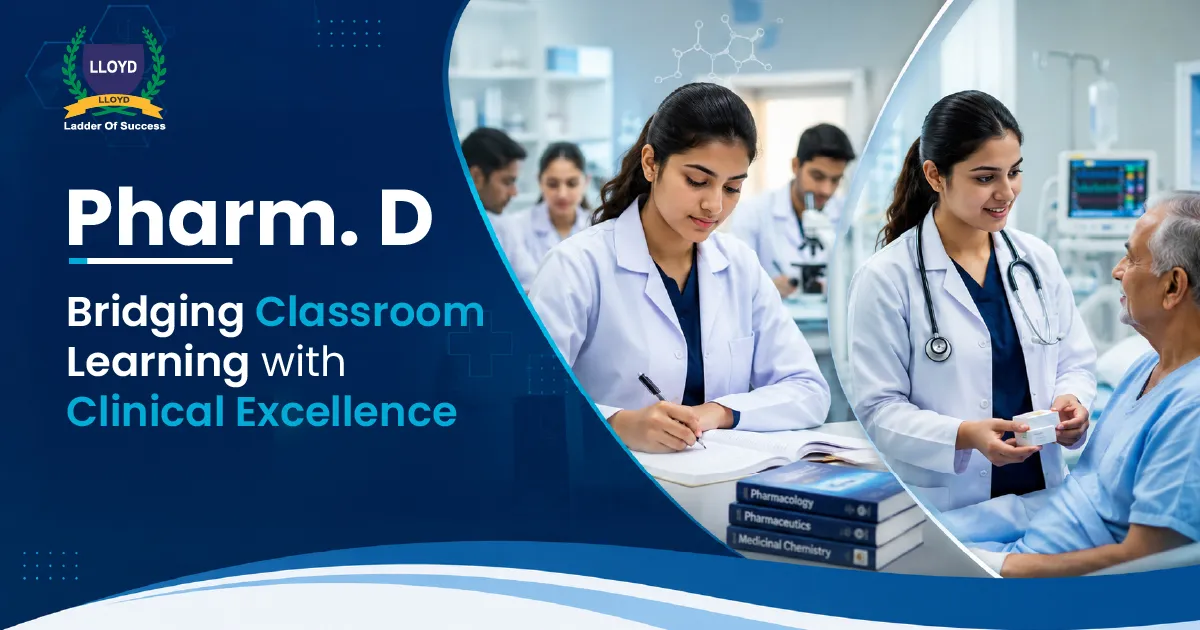
The healthcare industry is constantly changing alongside advances in medical science and technology, and the shift towards patient-centric care. Healthcare systems have become far more complex, creating a great need for professionals who can combine scientific knowledge with sound clinical decision-making. Clinical Pharmacists are among these healthcare professionals, and have become a vital component of the multi-disciplinary team in healthcare. The Doctor of Pharmacy (Pharm.D) program has been developed to meet these new challenges through both academic coursework and skill development training. Unlike the conventional approach, where pharmacy education focused mainly on pharmaceutical science and the dispensing of drugs, this course focuses more on students' understanding of patients and their role as a communicator within the healthcare team. The Pharm.D curriculum emphasises the need for students to work directly with patients in healthcare, combining the knowledge, confidence and skills needed to provide safe, effective and evidence-based pharmaceutical care – connecting the classroom with hands-on training through a hands-on, mentorship-driven approach to learning.
Understanding the Pharm.D Program
The Pharm.D program is a doctorate-level course that offers an in-depth understanding of pharmaceutical sciences, pharmacology, therapeutics and patient care. The course aims to give students a comprehensive grasp of theoretical knowledge, while also equipping them with the practical experience needed to apply that knowledge effectively in real-world clinical scenarios. A strong scientific foundation is built through subjects such as anatomy, physiology, biochemistry, pathology, microbiology, pharmacology and pharmacotherapeutics. As students progress through the program, their access to hospital settings increases, exposing them to patients, healthcare personnel and real clinical scenarios. This balance of theory and practice is what sets the Pharm.D program apart from conventional pharmacy courses, and equips graduates to take on greater responsibility within health systems.
Building a Strong Foundation Through Classroom Learning
The road to clinical excellence begins in the classroom, giving students a broad understanding of human body function, disease processes and drug interventions. Teaching focuses on a scientific approach to learning, on critical thinking, and on the use of evidence in medicine. Students learn how drugs are formulated, how they interact with the body, and how various diseases affect drug utilization. They are also introduced to topics such as pharmacovigilance and healthcare ethics, along with pharmaceutical jurisprudence, hospital pharmacy and clinical pharmacy. This comprehensive academic program gives students the opportunity to build an understanding of the scientific concepts that form the basis of safe and effective medication use. Through class discussions, case studies, seminars and problem-based learning, analytical thinking is further sharpened, equipping students to tackle challenging problems as they apply to real healthcare situations.
Bridging Theory with Clinical Practice
Clinical training is at the heart of the Pharm.D program. The complexities of patient care cannot be taught through lecture alone – they demand practical, hands-on experience to truly prepare pharmacy students for the realities of practice. Students gain this experience through close observation and direct involvement in patient care, rotating through hospital settings under close supervision, where they observe healthcare delivery, review patient records, attend ward rounds, and assist with medication administration. Through this, they build the ability to interpret patient histories, tests and lab values, identify medication-related problems, and suggest evidence-based therapeutic interventions. These experiences allow students to apply the concepts and skills they have acquired to real-life situations, where they gain confidence, clinical judgment and professional competence, along with a deeper awareness of today's healthcare environment.
Developing Clinical Decision-Making Skills
Clinical pharmacists are key members of a patient's healthcare team, responsible for helping ensure optimal and effective drug therapy. The Pharm.D curriculum is built to train students to analyze complex clinical cases and make decisions grounded in scientific evidence. Students take part in case presentations and patient evaluations, and regularly present and discuss patient cases to develop the ability to review treatment plans, detect drug interactions, adjust drug dosages, and evaluate therapeutic outcomes. They are equipped to take on challenges and propose solutions that enhance patient safety and the quality of care. This focus on clinical decision-making shifts students from passive learners into active healthcare contributors who add real value to patient care.
Enhancing Patient-Centred Care
The Pharm.D program instils students with a patient-centred approach. Students receive extensive training in patient counselling, communication and medication education. They develop the skills to explain treatment options in easy-to-understand terms, guide patients on taking their medication as prescribed, discuss potential side effects, and encourage adherence to prescribed therapy. Strong communication skills help manage patient expectations, build trust between patients and healthcare providers, and prevent medication errors – ultimately improving health outcomes. Through their interactions with patients, Pharm.D graduates become advocates for safe and responsible medication use.
The Importance of Hospital Rotations
One of the hallmarks of the Pharm.D is its hospital training. Students rotate through different departments such as internal medicine, cardiology, paediatrics, oncology, surgery, intensive care units and emergency medicine. These real-life experiences expose them to a wide range of diseases and treatment approaches, along with the many challenges present in healthcare. Working alongside doctors, nurses and experienced pharmacists, students see firsthand how healthcare is delivered through collaboration across disciplines. They gain hands-on experience in monitoring drug therapy, discussing care plans with patients, documenting interventions, and identifying adverse drug reactions. This hands-on exposure builds their confidence and professional awareness, and better equips them for a safe and efficient transition into clinical practice after graduation.
Research and Evidence-Based Practice
Healthcare continues to evolve, and evidence-based practice and research remain integral to healthcare education. The Pharm.D curriculum encourages research projects, engagement with scientific literature, clinical studies and presentation of research work. These activities build curiosity, analytical thinking, problem-solving skills and a strong grasp of research methodology. Students learn how to evaluate and interpret published work and clinical data to improve patient care. The program fosters a research-oriented approach to the practice of pharmacy, so that graduates remain lifelong learners who stay up to date with the latest medical research and treatment protocols.
Career Opportunities After Pharm.D
The growing clinical recognition of clinical pharmacists has led to a wide variety of career opportunities across different healthcare fields. Pharm.D graduates are well suited for employment in hospitals, pharmaceutical firms, clinical research and pharmacovigilance centres, regulatory affairs and medical writing companies, healthcare consulting firms and academia. They can also specialise in specific areas such as oncology pharmacy, critical care, infectious diseases, cardiology or pharmacotherapy. There are also growing career opportunities for clinical pharmacists internationally, owing to rising global demand. With the wide range of skills acquired through this flexible program, Pharm.D graduates can pursue rewarding careers both as scientists and as professionals who interact directly with patients, contributing to the design and delivery of new healthcare solutions.
Preparing for the Future of Healthcare
Artificial intelligence, telemedicine, precision medicine, pharmacogenomics and digital health solutions are just some of the technological innovations shaping the future of healthcare. A major part of the challenge for tomorrow's clinical pharmacists will be incorporating these developments into patient care. The Pharm.D curriculum is constantly updated to include new technologies, personalised medicine and clinical methods. Students are taught to respond to changing healthcare requirements, with a focus on patient safety, maximising the appropriate use of medicines, and effective interprofessional working. This gives them the clinical knowledge and skills to contribute meaningfully to the healthcare systems of the future.
Conclusion
A Doctor of Pharmacy (Pharm.D) program is not just an education – it's a life-changing experience that transforms a student's ability to provide care, while equipping them with the necessary clinical skills. The seamless integration of theory into practical, clinic-based experience allows theoretical knowledge to be applied directly in practice, strengthening the link between classroom learning and clinical proficiency. Graduates come away with strong knowledge of pharmaceutical sciences and hands-on experience in patient care, medication management, clinical research and interprofessional working. As healthcare continues to evolve, the need for highly qualified clinical pharmacists will only keep growing. As a Pharm.D graduate, you will be equipped to help improve medication safety, maximise therapeutic benefit, and advance patient education and evidence-based medicine. The Pharm.D course builds this correlation between classroom learning and clinical excellence, preparing future doctors of pharmacy to make a real difference in patients' health and in the ongoing improvement of healthcare.