Hands-on Training on Rotational Viscometer (Visco QC 100/300 R)
Photo Gallery
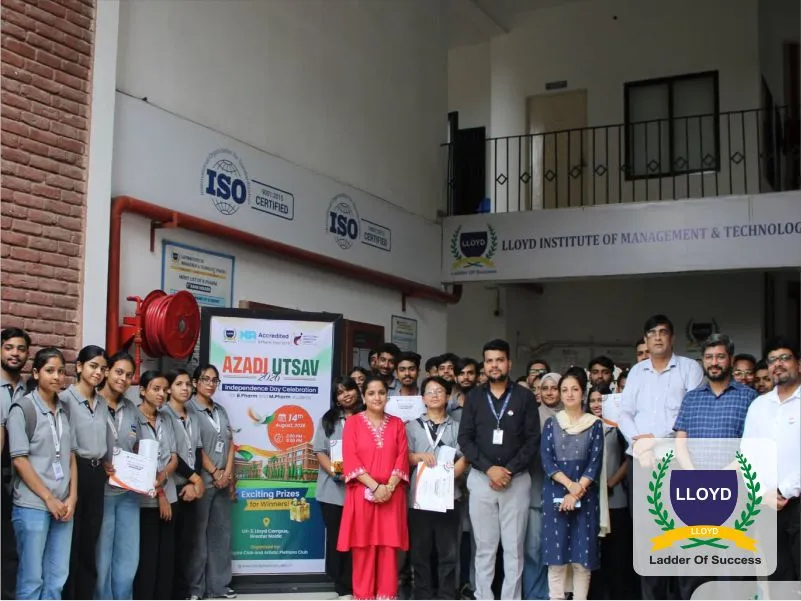
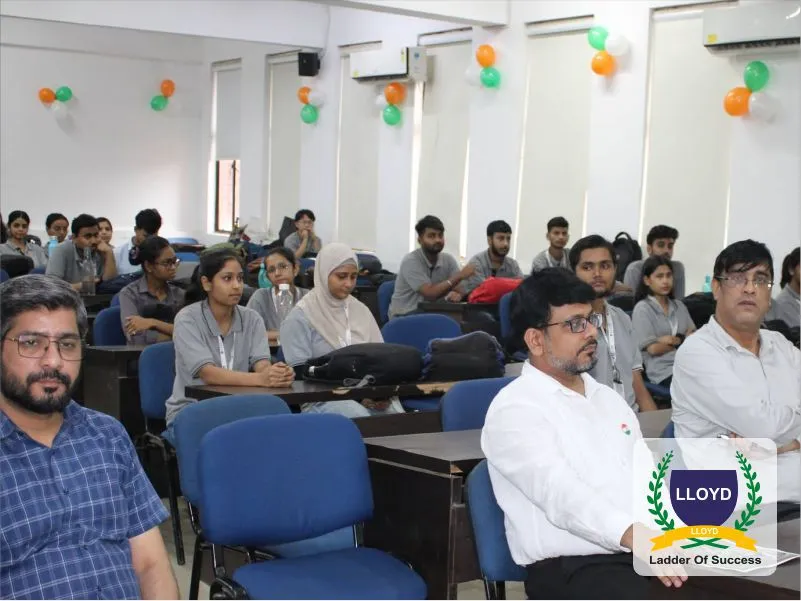
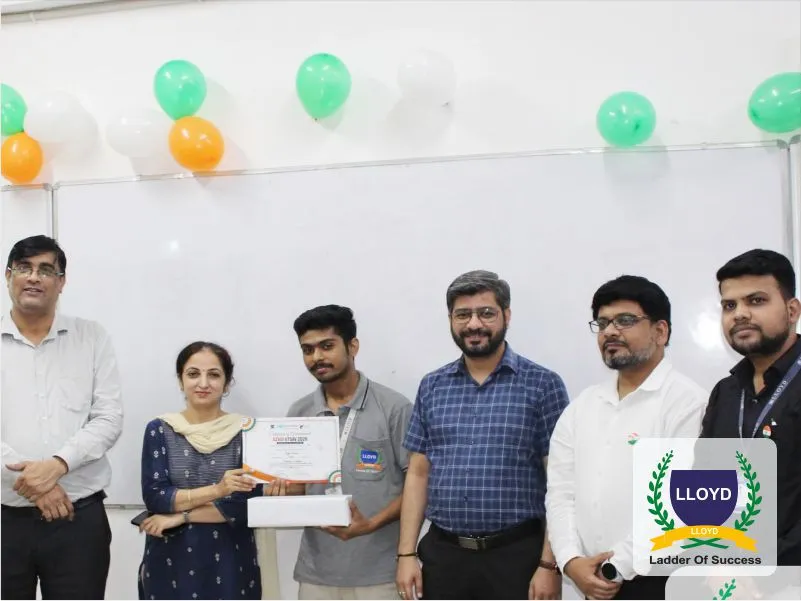
| Event Name : Hands-on Training on Rotational Viscometer (Visco QC 100/300 R) | Event Date : 05th May, 2026 |
| Resource Person : Mr. Manav Dixit, Sales Specialist, Anton Paar India Pvt. Ltd. | In collaboration with : Anton Paar India Pvt. Ltd. |
Introduction:
Department of Pharmacy, Lloyd Institute of Management & Technology (Pharm.), Greater Noida successfully organized a “Hands-on Training on Rotational Viscometer (Visco QC 100/300 R)” on 05th May, 2026 in collaboration with Anton Paar India Pvt. Ltd. The training session was conducted for faculty members, M.Pharm students, and B.Pharm students with the objective of providing practical exposure to advanced pharmaceutical analytical instrumentation and enhancing understanding of viscosity measurement techniques used in pharmaceutical industries and research laboratories.
Session Highlights
The session was delivered by Mr. Manav Dixit, Sales Specialist, Anton Paar India Pvt. Ltd., who shared his valuable industrial expertise and practical knowledge regarding the working principles, applications, operation, and maintenance of the Rotational Viscometer (Visco QC 100/300 R). During the session, the resource person explained the importance of viscosity determination in pharmaceutical formulations such as syrups, gels, suspensions, creams, lotions, semisolids, and other liquid dosage forms. He also highlighted the role of rheological studies in formulation development, quality control, stability studies, and industrial production processes.
Instrument Demonstration
The training included a detailed demonstration of the instrument, where participants learned about:
- Spindle selection and sample preparation.
- Speed optimization and temperature-controlled viscosity measurements.
- Calibration procedures and interpretation of viscosity data.
- Advanced features including automatic spindle detection, multipoint measurement, traceability functions, and software-assisted analysis.
The session emphasized the importance of maintaining accurate temperature conditions, proper leveling of the instrument, and avoiding operational errors for obtaining precise and reproducible results.
Hands-on Session
The hands-on component of the training provided participants with an opportunity to operate the instrument individually under expert guidance. The interactive nature of the session encouraged active participation and enhanced practical understanding among students regarding industrial analytical practices and quality control procedures followed in pharmaceutical industries.
Conclusion
Faculty members and students appreciated the informative and industry-oriented nature of the training program. The session significantly contributed towards bridging the gap between theoretical learning and practical industrial applications. It also motivated students to develop technical competencies and analytical skills essential for research, higher education, and pharmaceutical industrial careers.