Digital Wellness Course - Session 1: Promoting Responsible Digital Usage and Mental Well-being
Photo Gallery
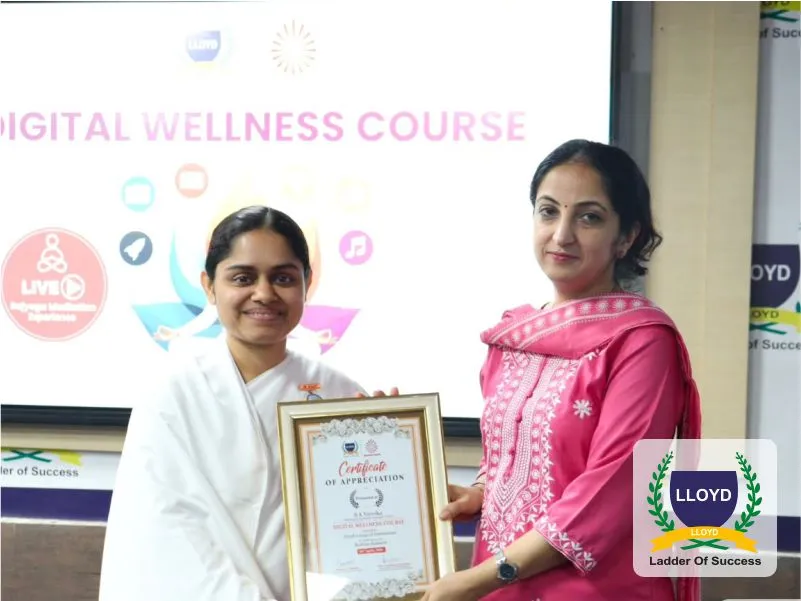
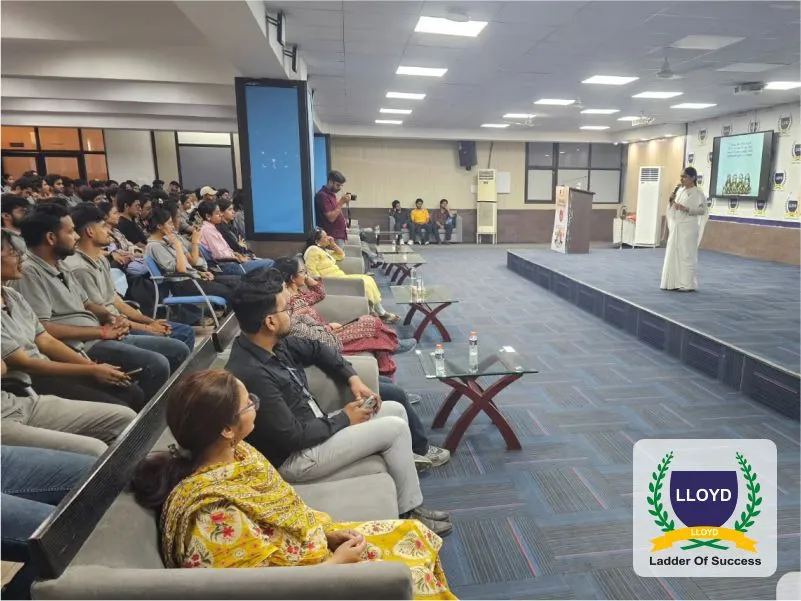
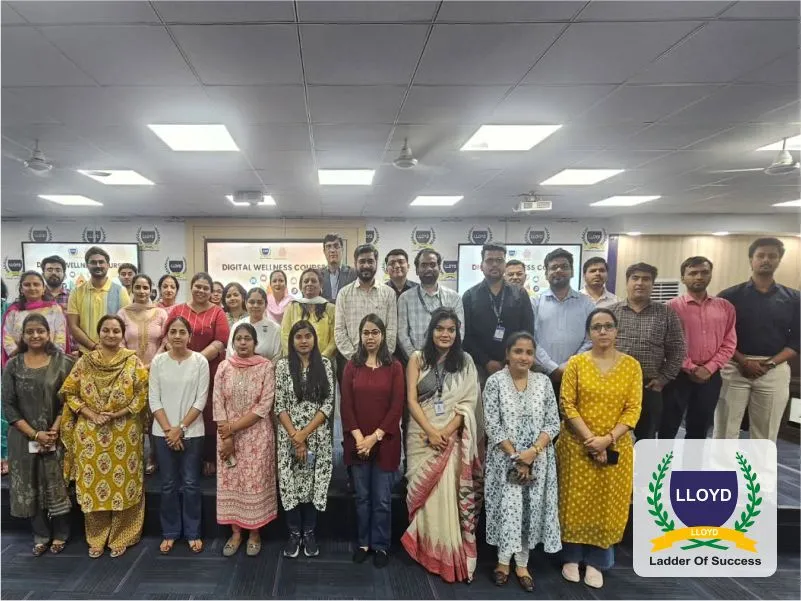
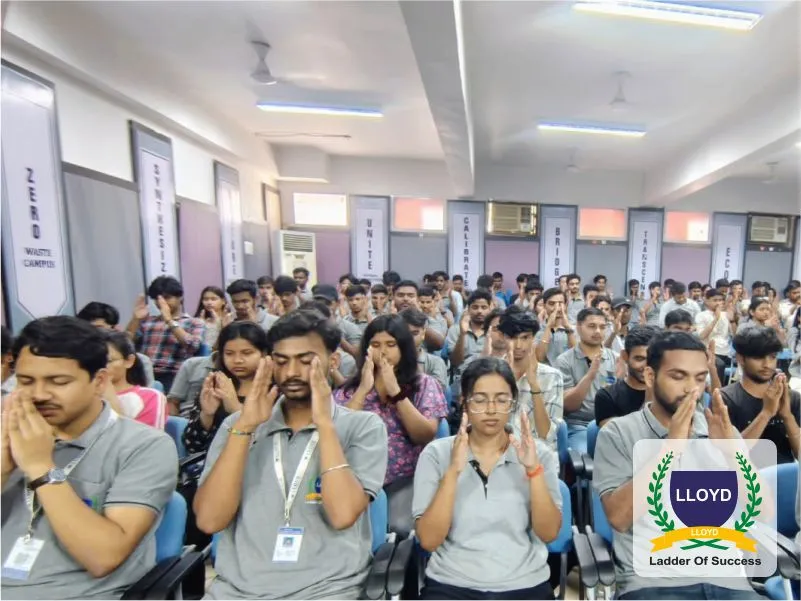
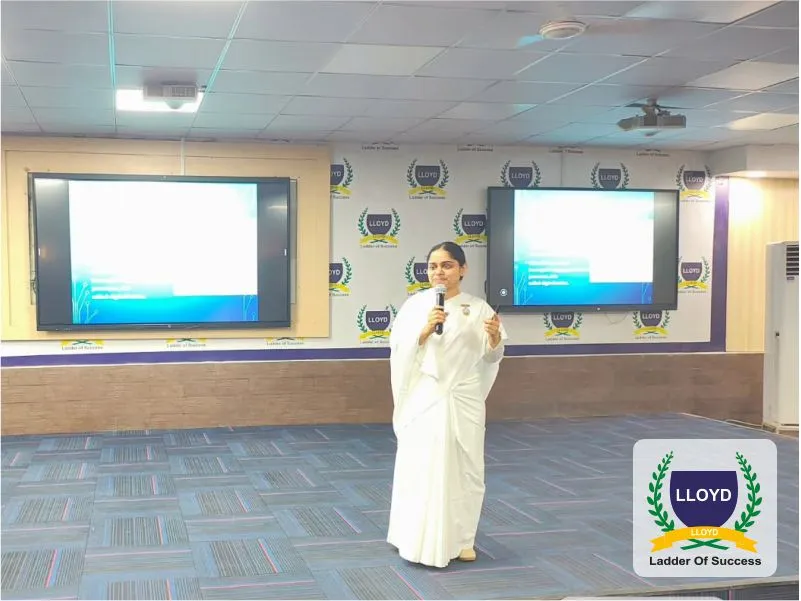
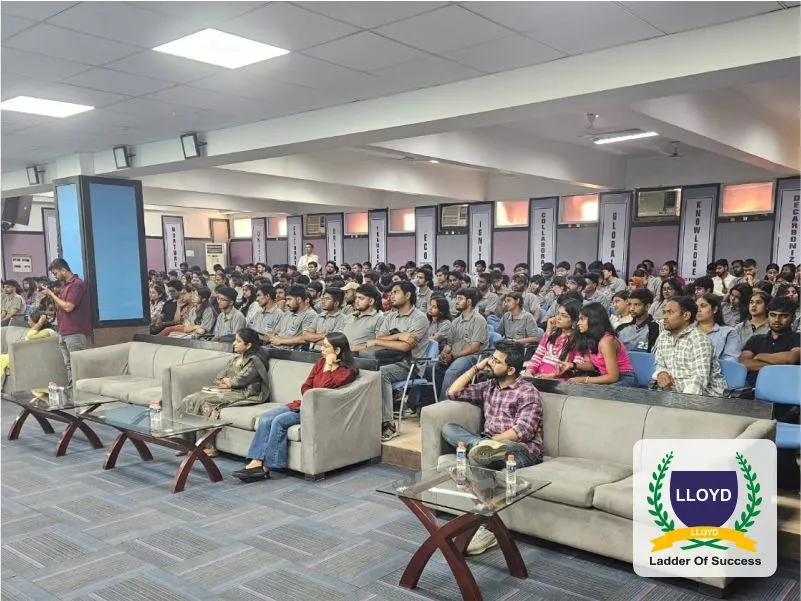
| Event Name : Digital Wellness Course – Session 1: Promoting Responsible Digital Usage and Mental Well-being | Event Date : 16th April, 2026 |
| Time : 12:30 PM – 1:30 PM (Students) | 2:00 PM – 3:00 PM (Faculty) | Venue : Seminar Hall, Lloyd Campus-1, Greater Noida |
| Organized by : Lloyd Group of Institutions in collaboration with Brahma Kumaris | |
Introduction:
Lloyd Group of Institutions, in collaboration with Brahma Kumaris, commenced the Digital Wellness Course on 16th April, 2026 to promote responsible digital habits, improve concentration, enhance mental well-being, and encourage a balanced relationship with technology. The first session was conducted separately for students from 12:30 PM to 1:30 PM and faculty members from 2:00 PM to 3:00 PM.
The session was attended by B.Pharm. and M.Pharm. students, who gained an understanding of the importance of digital wellness, the effects of excessive screen time, and the impact of digital distractions on concentration, personal relationships, and emotional well-being. The session encouraged students to reflect on their digital habits and adopt healthier practices to maintain a balance between technology use, academic responsibilities, and personal life.
The faculty session was attended by all faculty members of the institute, who were sensitized to the importance of responsible digital usage and its relevance to professional effectiveness and overall well-being. The session provided an opportunity for faculty members to understand the challenges associated with excessive digital engagement and explore practical approaches to improving focus, managing distractions, and maintaining a healthy work-life balance.
Key Highlights of the Session
The session introduced the fundamentals of digital wellness and highlighted both the benefits and challenges of digitalization. Participants learned how technology improves work efficiency, facilitates communication, and provides quick access to information, while its excessive and unmindful use may contribute to distractions, reduced meaningful social interactions, and difficulties in maintaining concentration. A major focus was placed on digital detox, which was explained as the conscious and responsible use of digital devices rather than the complete avoidance of technology. Participants were encouraged to ensure that technology remains a useful tool and does not become a source of distraction or dependency.
The session also emphasized practical strategies for conscious digitalization, such as limiting unnecessary browsing, reducing the use of applications with infinite scrolling, keeping only essential applications on mobile devices, and exercising control over when, how much, and why technology is used. The importance of reading, engaging in creative activities, and spending quality time with family members was also highlighted.
Another important component was mastering the mind through Rajyoga meditation. Participants were introduced to the role of thoughts, intellect, and habits in shaping behaviour and decision-making. Meditation was discussed as a means of cultivating positive thoughts, improving concentration, developing mental clarity, and promoting emotional balance.
Practical Takeaways
Participants were encouraged to adopt the following five practices before the next session:
- Keep mobile phones outside the bedroom to create an e-free sleeping environment.
- Avoid carrying mobile phones to breakfast, lunch, and dinner.
- Spend uninterrupted quality time with family members in the evening.
- Avoid using mobile phones before sleeping and develop a habit of reading books.
- Remove time-consuming and unnecessary applications from mobile devices.
The session concluded with a guided Rajyoga meditation experience, encouraging students and faculty members to incorporate mindfulness and positive thinking into their daily routines.
Conclusion
The first session of the Digital Wellness Course was an informative initiative aimed at promoting responsible technology usage and holistic well-being among students and faculty members. B.Pharm. and M.Pharm. students developed an understanding of digital wellness and practical ways to manage digital distractions, while all faculty members were sensitized to the importance of mindful technology use, self-discipline, and maintaining a balanced professional and personal life.
The collaboration with Brahma Kumaris introduced participants to practical approaches for developing healthier digital habits and nurturing inner peace through Rajyoga meditation. Overall, the session encouraged participants to use technology mindfully, strengthen their concentration, and maintain a healthy balance between digital engagement and real-life interactions.